Файл:PIA15038 Spirit Lander and Bonneville Crater in Color.jpg




Тасвирлама
| Тасвир |
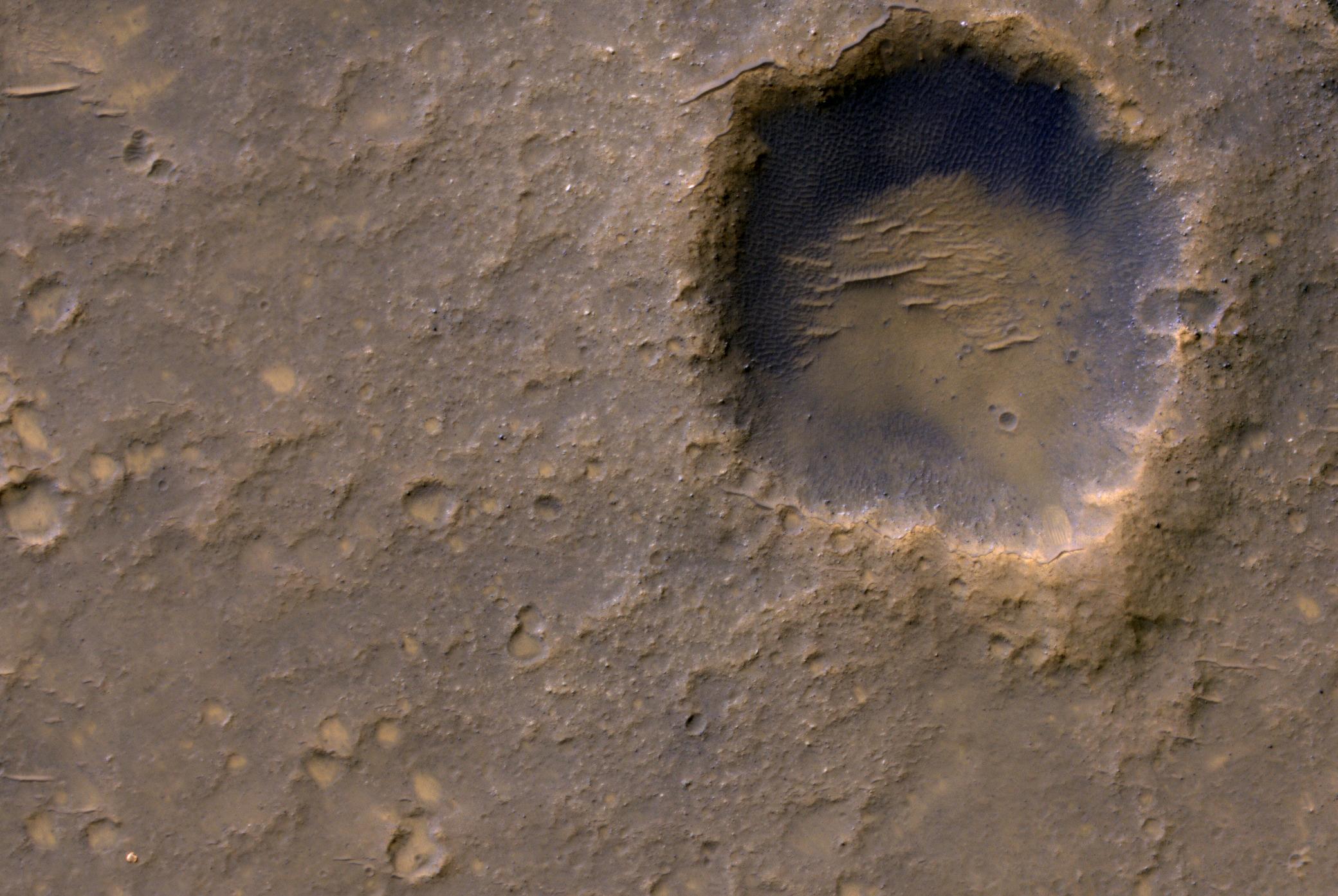
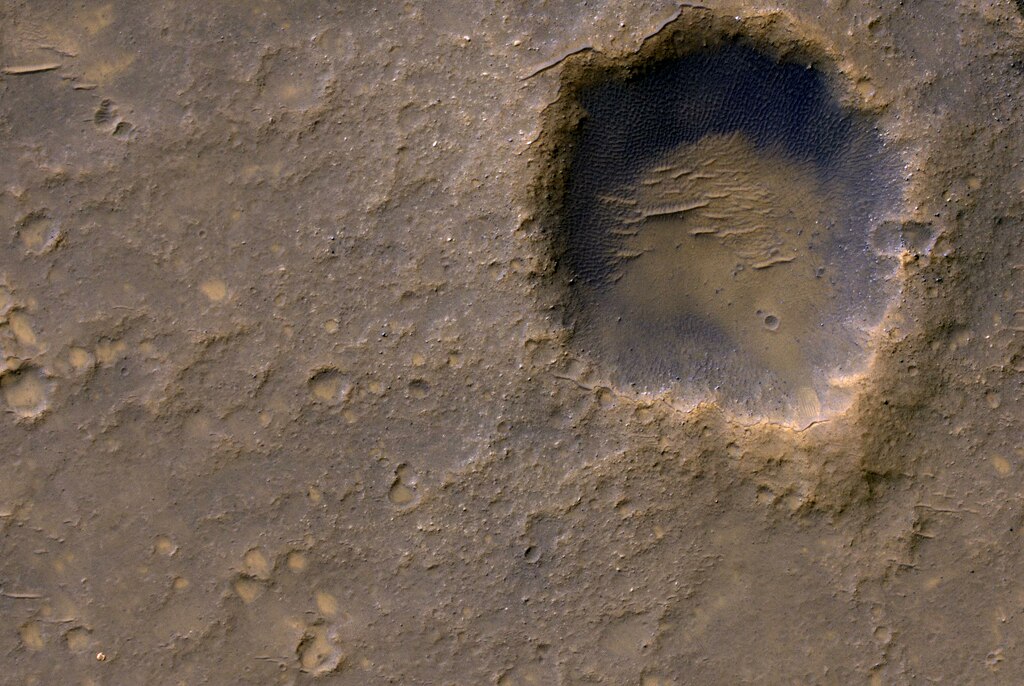
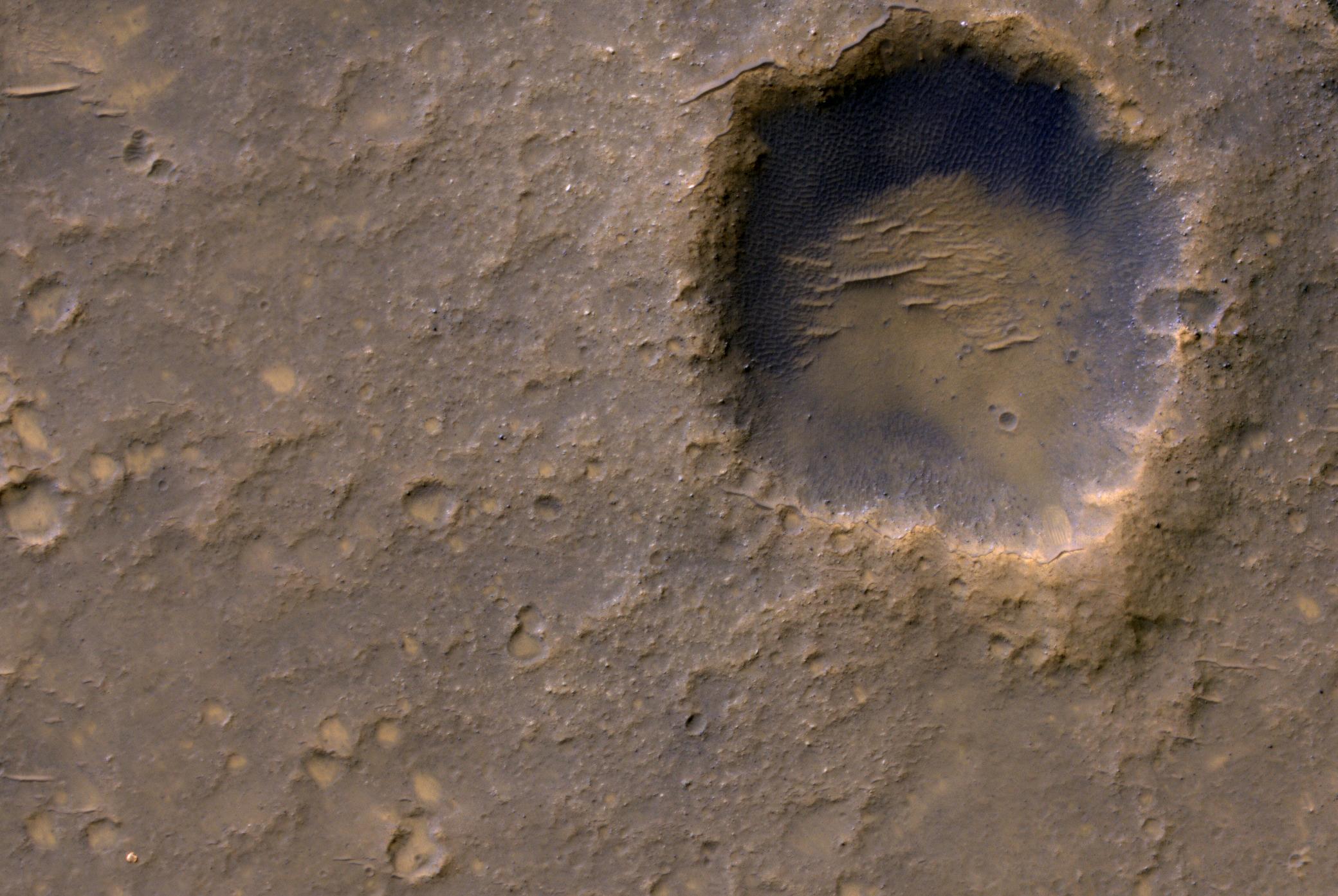
English: Near the lower left corner of this view is the three-petal lander platform that NASA's Mars Exploration Rover Spirit drove off in January 2004. The lander is still bright, but with a reddish color, probably due to accumulation of Martian dust.
The High Resolution Imaging Science Experiment (HiRISE) camera on NASA's Mars Reconnaissance Orbiter recorded this view on Jan. 29, 2012, providing the first image from orbit to show Spirit's lander platform in color. The view covers an area about 2,000 feet (about 600 meters) wide, dominated by Bonneveille Crater. North is up. A bright spot on the northern edge of Bonneville Crater is a remnant of Spirit's heat shield. Spirit spent most of its six-year working life in a range of hills about two miles east of its landing site. An image of the lander platform taken by Spirit's Panoramic Camera (Pancam) after the rover had driven off is at PIA05117. The bright heat shield remnant can be seen in a panorama the same camera took of Bonneville Crater, at PIA05591. This image is one product from HiRISE observation ESP_025815_1655. Other products from the same observation can be found at ESP_025815_1655. HiRISE is operated by the University of Arizona, Tucson. The instrument was built by Ball Aerospace & Technologies Corp., Boulder, Colo. NASA's Jet Propulsion Laboratory, a division of the California Institute of Technology in Pasadena, manages the Mars Reconnaissance Orbiter Project for NASA's Science Mission Directorate, Washington. Lockheed Martin Space Systems, Denver, built the spacecraft. |
| Дата | (published 8 февраль 2012) |
| Чыганак | Catalog page · Full-res (JPEG · TIFF) |
| Автор | NASA/JPL-Caltech/Univ. of Arizona |

.jpg)

|
Это изображение или видеозапись внесены в каталог Лаборатории реактивного движения НАСА под идентификатором (Photo ID): PIA15038. Эта пометка не указывает на правовой статус произведения. По-прежнему необходим нормальный шаблон лицензии. См. подробнее правила лицензирования Викисклада. Другие языки:
|
Лицензияләү

|
Этот файл находится в общественном достоянии (англ. public domain), так как он был создан NASA (Национальным управлением по аэронавтике и исследованию космического пространства). Политика авторского права NASA гласит, что «Материал NASA не защищается авторским правом, если не указано иное». (См. Template:PD-USGov, страницу политики авторского права NASA или политику использования изображений JPL.) |  |
 |
Предупреждения:
|
Файл тарихы
Файлның нинди булганлыгын күрү өчен «дата/вакыт» дигәненә басыгыз.
| Дата/вакыт | Кече рәсем | Үлчәмнәре | Кулланучы | Искәрмә | |
|---|---|---|---|---|---|
| агымдагы | 12 фев 2012, 12:11 | | 2080 × 1393 (346 Кб) | wikimediacommons>Spideog |
Файлны куллану
Әлеге файл киләсе битне куллана:
